
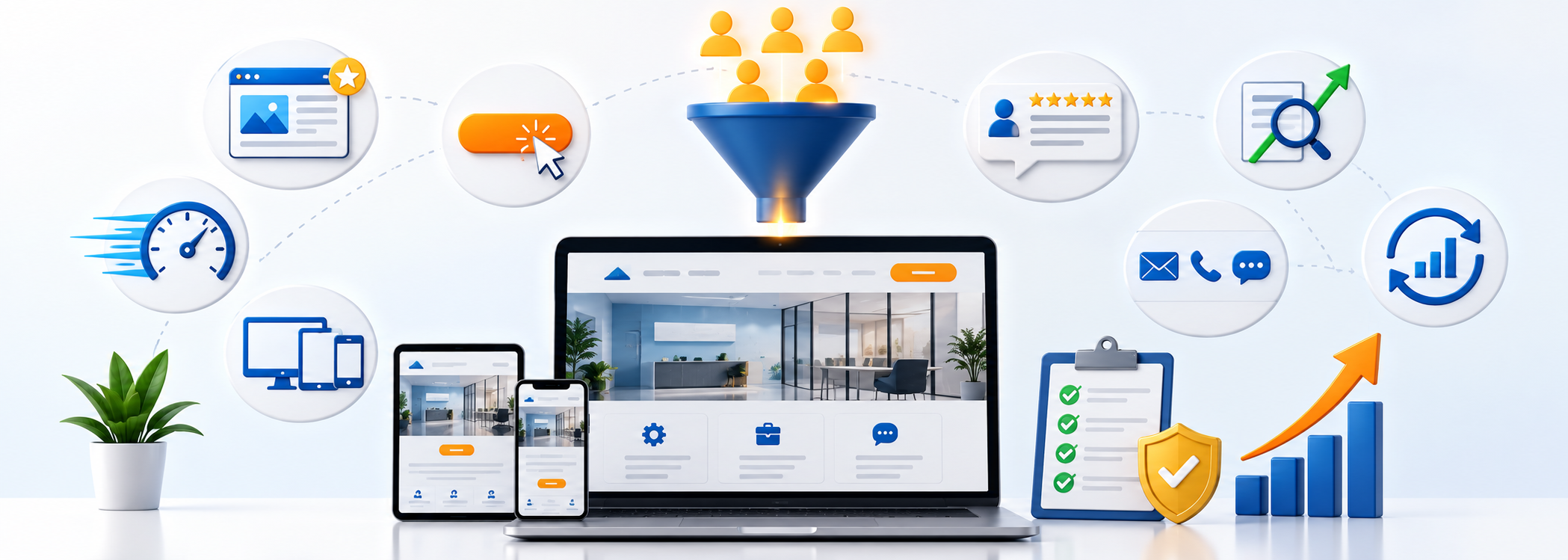
Your website should be more than just an online brochure—it should be a powerful lead generation tool that helps your business attract, engage, and convert potential customers. In today’s competitive digital marketplace, visitors expect a fast, professional, and user-friendly experience before deciding to contact a business. By improving your website’s design, content, and functionality, you can significantly increase inquiries, quote requests, and sales opportunities. Below are five practical strategies that help businesses generate more qualified leads through their websites.
Key Highlights:
- Professional Website Design is a strong first impression with a clean, modern, and user-friendly website that builds trust instantly.
- Clear Call-to-Action Buttons place strategically designed CTAs throughout your website to encourage visitors to contact your business or request a quote.
- Fast Loading Performance is to improve page speed and mobile responsiveness to reduce bounce rates and keep users engaged.
- Mobile-Friendly Experience is ensure your website delivers a seamless browsing experience across smartphones, tablets, and desktops.
- Trust-Building Elements is showcase testimonials, client reviews, certifications, and successful projects to increase customer confidence.
- SEO-Optimized Content is to optimize pages with relevant keywords, quality content, and proper on-page SEO to attract targeted organic traffic.
- Simple Contact Process is to make it easy for visitors to reach you with accessible contact forms, click-to-call buttons, and multiple communication options.
- Continuous Website Optimization is to regularly monitor website performance, update content, and improve user experience to generate more qualified leads over time.
Optimize Your Website for Mobile Users
With the majority of internet users accessing websites through smartphones and tablets, having a mobile-friendly website is no longer optional—it is essential for business success. A responsive website automatically adjusts its layout, images, menus, and content to fit different screen sizes, ensuring visitors enjoy a smooth browsing experience regardless of the device they use. When users can easily navigate your website without zooming, scrolling sideways, or waiting for pages to load, they are more likely to stay longer and interact with your business.
Google also prioritizes mobile-friendly websites in its search rankings through its mobile-first indexing approach. This means websites that deliver a seamless mobile experience are more likely to appear higher in search engine results, attracting more organic traffic and increasing visibility. A responsive website not only improves SEO performance but also strengthens your brand image by presenting a professional and user-focused online presence.
Use Clear and Effective Call-to-Actions
A well-designed website should guide visitors toward taking a specific action rather than leaving them wondering what to do next. Clear and compelling Call-to-Actions (CTAs) are essential for converting website visitors into potential customers. Whether your goal is to generate inquiries, book consultations, request quotations, or increase sales, strategically placed CTA buttons help direct users through the customer journey.
Effective CTAs use simple, action-oriented language such as Request a Quote, Contact Us, Book a Free Consultation, Get Started Today, or Call Now. These phrases create a sense of direction and encourage visitors to engage with your business. The wording should clearly communicate the value users will receive after clicking the button, making the decision easier and more appealing.

Provide Valuable Content That Solves Problems
Helpful blogs, guides, service pages, and downloadable resources establish your business as an industry expert. Valuable content answers customer questions, builds trust, improves SEO performance, and encourages visitors to spend more time on your website before contacting your business.

Build Trust with Reviews and Success Stories
Trust is one of the most important factors that influences a visitor’s decision to contact your business or make a purchase. Before choosing a company, most potential customers look for proof that others have had positive experiences. Displaying authentic customer testimonials, Google reviews, successful case studies, completed projects, client logos, and industry certifications helps establish credibility and demonstrates your expertise. These trust signals reassure visitors that your business consistently delivers quality services and values customer satisfaction.
A well-structured trust section on your website can significantly improve conversion rates by reducing uncertainty and building confidence. Featuring detailed testimonials with customer names, company information, or project outcomes makes your reviews more authentic and relatable. Highlighting completed projects allows visitors to see real examples of your work, while recognizable client logos reinforce your reputation and industry experience. Professional certifications, awards, partnerships, and security badges further demonstrate that your business follows industry standards and best practices.
- Display genuine customer testimonials to build credibility.
- Showcase positive Google reviews and ratings from satisfied clients.
- Highlight successful projects and real business case studies.
- Feature recognizable client logos to strengthen brand trust.
- Display industry certifications, awards, and professional accreditations.
- Include before-and-after project results where applicable.
- Keep reviews and testimonials updated with recent customer feedback.
- Add trust badges, secure payment icons, and SSL certificates to improve visitor confidence.
Improve Website Performance and SEO
A fast, secure, and SEO-optimized website attracts more targeted visitors from search engines while providing a better user experience. Optimizing page speed, website structure, images, keywords, and internal links helps improve search rankings and generates long-term organic leads without relying solely on paid advertising.