
The e-commerce industry in Dubai and across the UAE continues to grow rapidly as more consumers choose the convenience of online shopping. Whether you are launching a new online business or expanding an existing retail brand, having a professionally developed e-commerce website is essential for long-term success. A successful online store is much more than an attractive design—it requires the perfect balance of user experience, performance, security, scalability, and digital marketing.
Modern customers expect fast-loading pages, mobile-friendly shopping experiences, secure payment options, and simple navigation. Search engines also prioritize websites that provide excellent performance and valuable content. Investing in professional e-commerce website development helps businesses build trust, increase conversions, improve customer retention, and compete effectively in Dubai’s growing digital marketplace.
Key Highlights:
- Define clear business goals before starting development.
- Select the right e-commerce platform based on your business needs.
- Create a responsive design for all devices.
- Improve customer experience with intuitive navigation.
- Implement secure payment gateways and SSL protection.
- Optimize every page for search engine visibility.
- Improve website speed and Core Web Vitals.
- Use high-quality product images and descriptions.
- Build a scalable website for future business growth.
- Integrate analytics, CRM, and marketing automation tools.
- Optimize for local SEO in Dubai and the UAE.
- Continuously maintain and update your online store.
Define Your Business Goals Before Development
Before selecting a platform or designing your website, it is important to establish clear business objectives. Every e-commerce business has different requirements depending on the products it sells, the target audience, and future expansion plans. Understanding your goals helps developers create a website that supports both current operations and long-term growth.
A business selling a limited number of products requires a different solution than a marketplace managing thousands of items from multiple vendors. Defining your goals early also helps determine your website structure, navigation, payment systems, shipping options, and customer management features. Proper planning reduces development costs, avoids unnecessary revisions, and creates a smoother development process.
Choose the Right E-commerce Platform
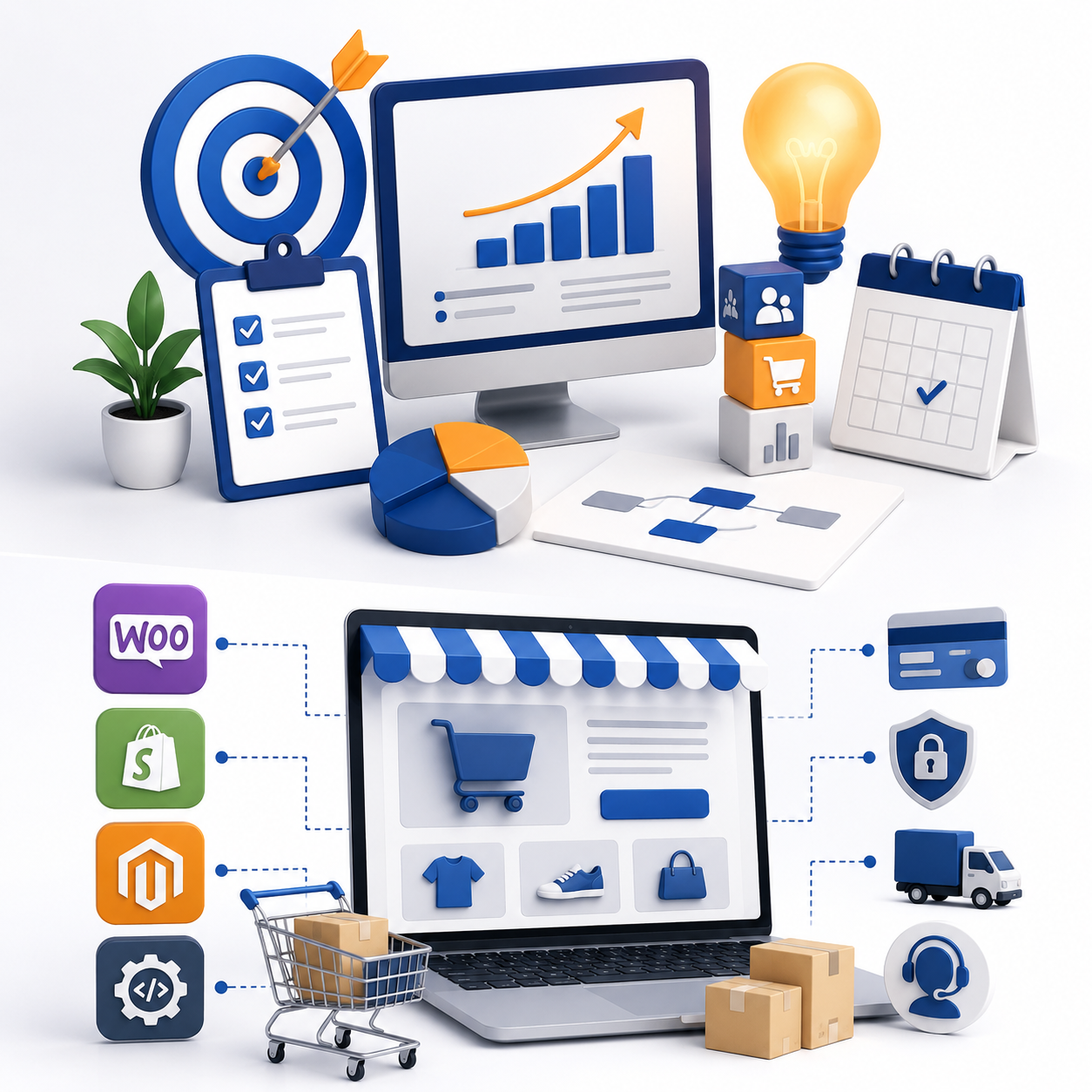
Selecting the right platform is one of the most important decisions during website development. Popular platforms such as WooCommerce, Shopify, Magento, and custom-built solutions each offer unique advantages depending on your business requirements.
WooCommerce is ideal for businesses already using WordPress and looking for flexibility. Shopify provides a simple hosted solution with minimal technical management, making it suitable for startups and small businesses. Magento is designed for larger businesses requiring advanced functionality, while custom e-commerce development offers complete flexibility for companies with unique operational requirements.
Choosing the right platform ensures better performance, easier maintenance, stronger security, and the ability to scale your online business as it grows.
Focus on User Experience and Mobile Responsiveness
Customer experience directly influences online sales. Visitors should be able to browse products, search categories, compare options, and complete purchases with minimal effort. A responsive design ensures that your website functions perfectly on smartphones, tablets, laptops, and desktop computers.
Navigation should remain simple, product pages should provide clear information, and checkout should require as few steps as possible. Fast loading speeds, attractive product images, and intuitive layouts help reduce bounce rates while increasing customer satisfaction. A positive user experience encourages repeat purchases and strengthens brand loyalty.

Implement Secure Payments and Customer Protection
Security is one of the biggest concerns for online shoppers. Customers expect secure payment gateways, encrypted transactions, and reliable data protection before sharing personal or financial information. Implementing SSL certificates, trusted payment gateways, fraud prevention systems, and secure authentication builds confidence and protects both customers and businesses.
Providing multiple payment options, including credit cards, debit cards, digital wallets, and local payment methods commonly used in the UAE, also improves the overall shopping experience and reduces cart abandonment.
Optimize Your E-commerce Website for SEO
Search Engine Optimization (SEO) should be integrated into every stage of e-commerce website development rather than added after launch. Proper SEO helps your products and category pages appear in Google search results, increasing organic traffic and reducing dependence on paid advertising.
Optimizing product titles, meta descriptions, URLs, images, internal links, structured data, and category pages improves search visibility. Publishing informative blogs, buying guides, and product-related content further strengthens SEO while helping customers make informed purchasing decisions.
For businesses targeting Dubai and the UAE, Local SEO is equally important. Optimizing your Google Business Profile, location pages, and local keywords helps nearby customers discover your online store more easily.
Improve Website Speed and Performance
Website speed plays a major role in both customer satisfaction and search engine rankings. Even a one-second delay can significantly reduce conversions and increase bounce rates. Optimizing images, enabling browser caching, minimizing unnecessary scripts, using Content Delivery Networks (CDNs), and selecting reliable hosting providers all contribute to better website performance.
A fast website improves user engagement, encourages customers to explore more products, and creates a smoother checkout experience. Regular performance monitoring helps identify and resolve issues before they impact sales.
Build a Scalable Online Store
As your business grows, your website should be able to support increased traffic, additional products, and expanding customer demands without sacrificing performance. Scalable development allows businesses to integrate advanced features such as inventory management, CRM systems, ERP software, loyalty programs, multilingual support, multi-currency payments, and AI-powered product recommendations.
Planning for future growth during the initial development stage helps avoid expensive redesigns and ensures your website remains competitive for years to come.